The tub was already finished
The carbon MonoCage came straight from the road car, unaltered. That is the reason the GTR could exist at all: the hardest and most expensive part of the engineering had been signed off years earlier.

Fifty-eight built. None of them offered to the public.
Build slots went only to existing owners of the P1 road car. This chassis has covered 230 kilometres since delivery and remains exactly as McLaren Special Operations released it, in the livery the model was launched in.
Every car McLaren had built until then answered to somebody. A road car answers to legislation. A GT3 car answers to a rulebook that exists to slow it down.
The GTR answered to neither. There was no series to enter and no homologation to pass, because the customers who had asked for it were not going racing. They wanted the car that regulation had been preventing.
McLaren Special Operations took the work on once the 375th and final road car was complete, with one instruction. The best driver's car in the world on a circuit.

A brief that narrow leaves fingerprints. They sit on the mirrors, the roof, the rear deck.

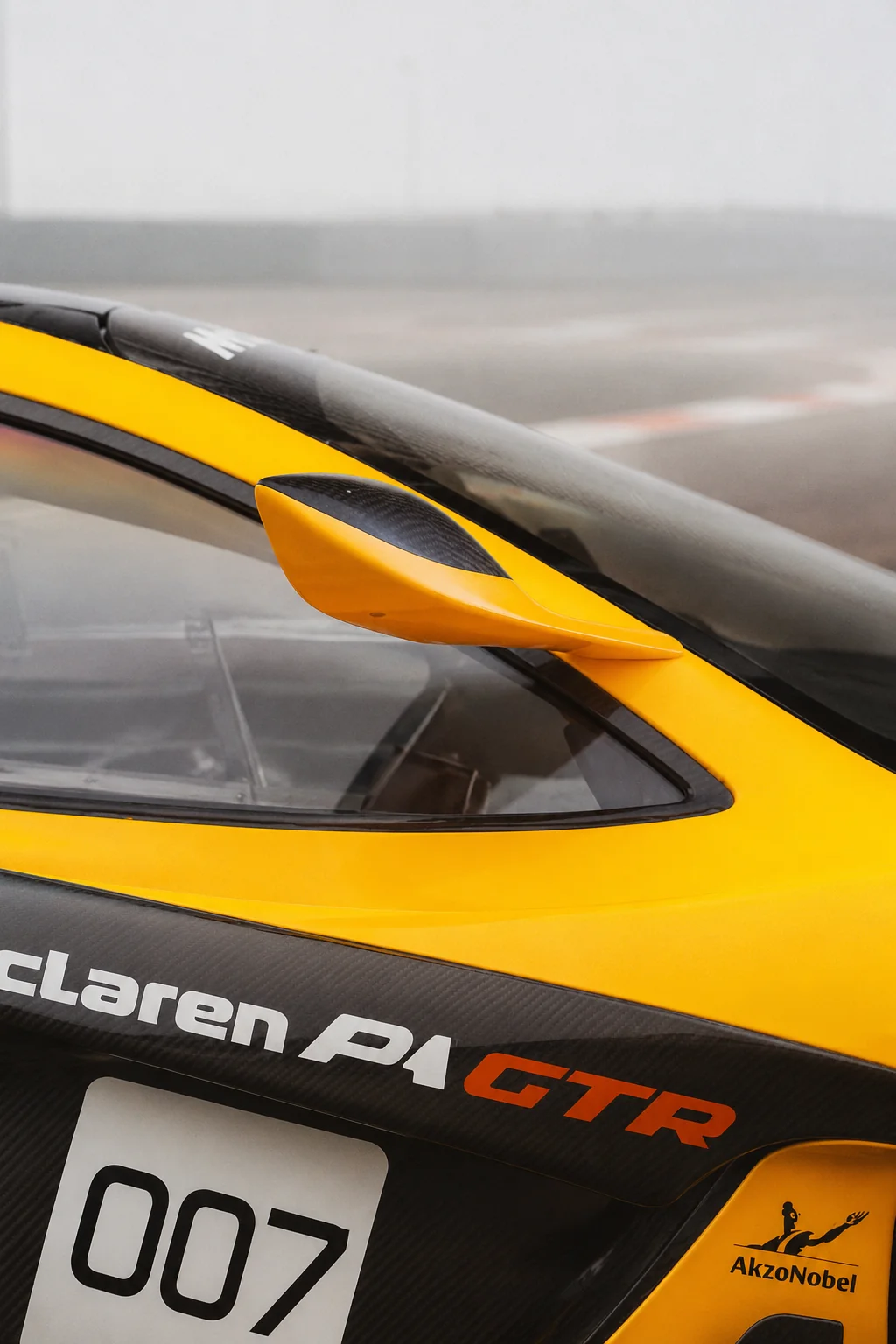

Start with the mirrors. They are not on the doors. They sit on the A-pillars, closer to the driver's eyeline and out of the airstream, a change made for two reasons at once and unavailable to any car that has to be road registered.
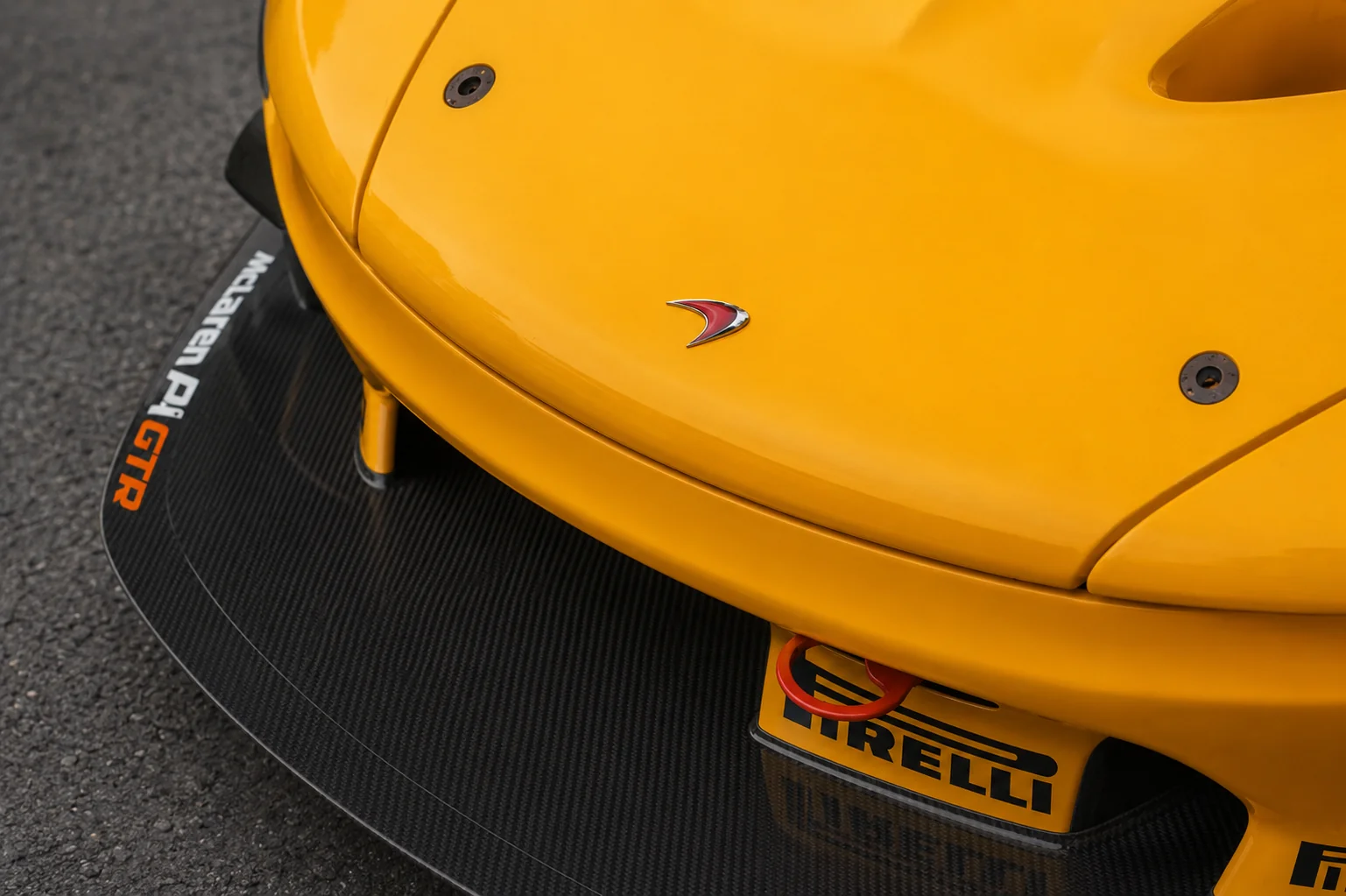
The front track is 80 mm wider than the P1's. The splitter is GT-derived, the radiator ducts run into flared arches, and behind each front wheel an aero blade lifts the wake off the tyre and carries it along the lower edge of the dihedral doors into the rear bodywork.
The road car had to stow its wing, with pistons and mechanism buried beneath the surface. Here the wing is fixed, twin element, carried on carbon pylons, which let the rear deck close into one unbroken plane feeding clean air beneath it.
Above the cabin sits a snorkel intake, a direct quotation of the original F1, feeding the V8 through the top of the carbon MonoCage.
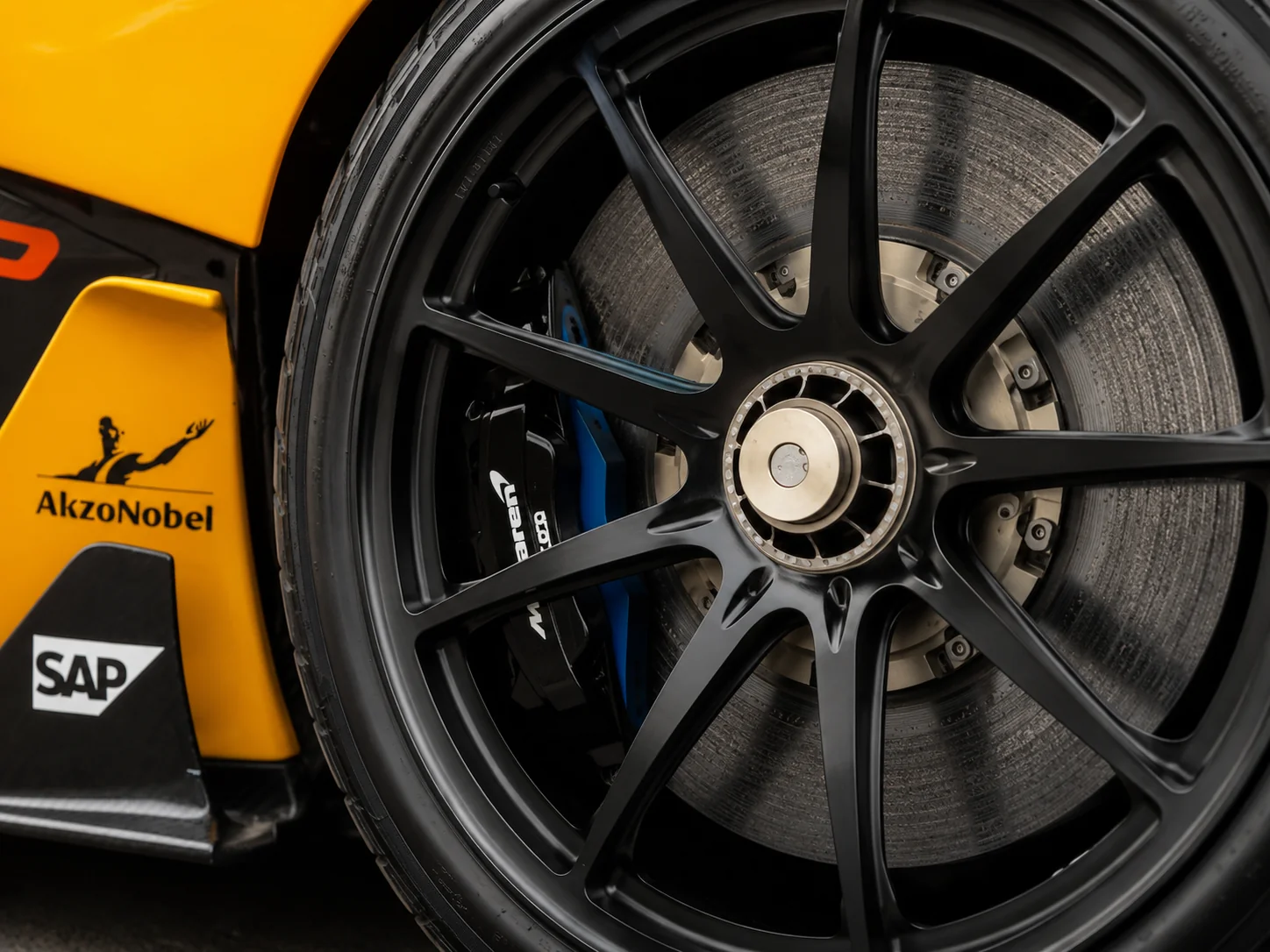
The wheels are nineteen inch motorsport alloys, 10.5 inches across at the front and 13 at the rear, each held by a single centre-lock nut. Behind them an onboard air jacking system lifts the car clear for a tyre change, the same principle McLaren uses on its GT3 machinery.
None of it was drawn to be admired. Every piece of it exists because a stopwatch or a pit crew asked for it.
Everything so far was decided by air moving over the car. What comes next was decided by air moving through it.

A clean sheet was available and was not used. The engine is the road car's M838TQ, unchanged in capacity, unchanged in its turbochargers, and the seven-speed dual-clutch behind it was carried over intact. The customers were not professional drivers, and a car that flatters on the first lap is worth more to them than a car that rewards on the fiftieth.
The permission was granted further back. A straight-cut twin-pipe exhaust in Inconel and titanium alloy, exposed and mounted centrally below the wing, built for this model alone, and the source of almost all of the 83 bhp the GTR gained.
The hybrid system stayed too, for a reason that has nothing to do with emissions. It fills torque into the gaps while the turbos are off boost, which is why a 1,000 PS car with two turbochargers behaves as though it has none, and why the powerband runs to seven thousand rpm without a hole in it.
Both systems were then put under the driver's thumbs. DRS on the left stalls the wing on a straight and returns the speed that downforce costs. IPAS on the right releases the electric output on demand, used as a push-to-pass rather than as an economy measure.
The chassis is where the road car was overruled. The hydraulically active suspension is gone, replaced by a fixed ride height, a race setup and slick Pirelli tyres developed with McLaren for this application. Later braking, higher apex speed, earlier throttle.
Fifty kilograms went out while a fire suppression system, pit radio and air jacks went in. McLaren put the whole exercise at seven seconds a lap over the P1 at Losail.
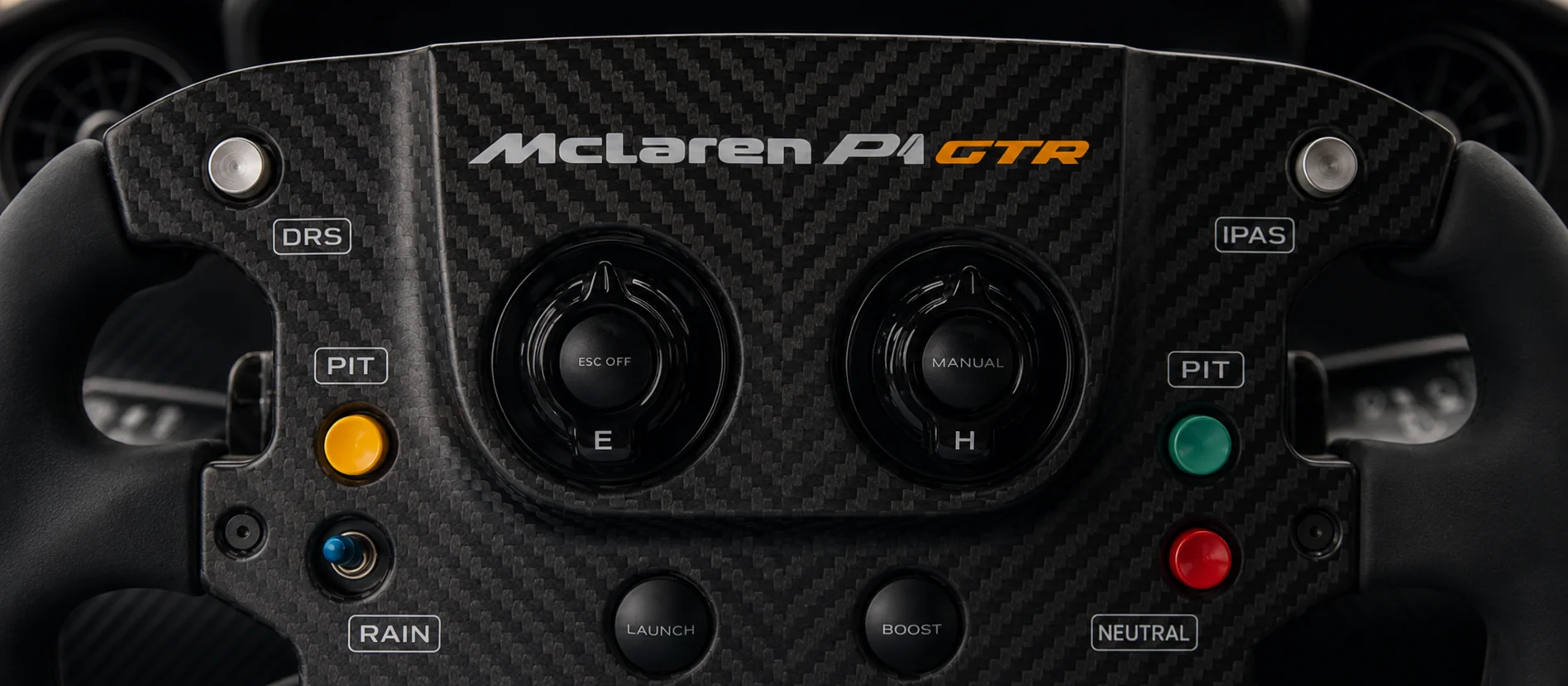

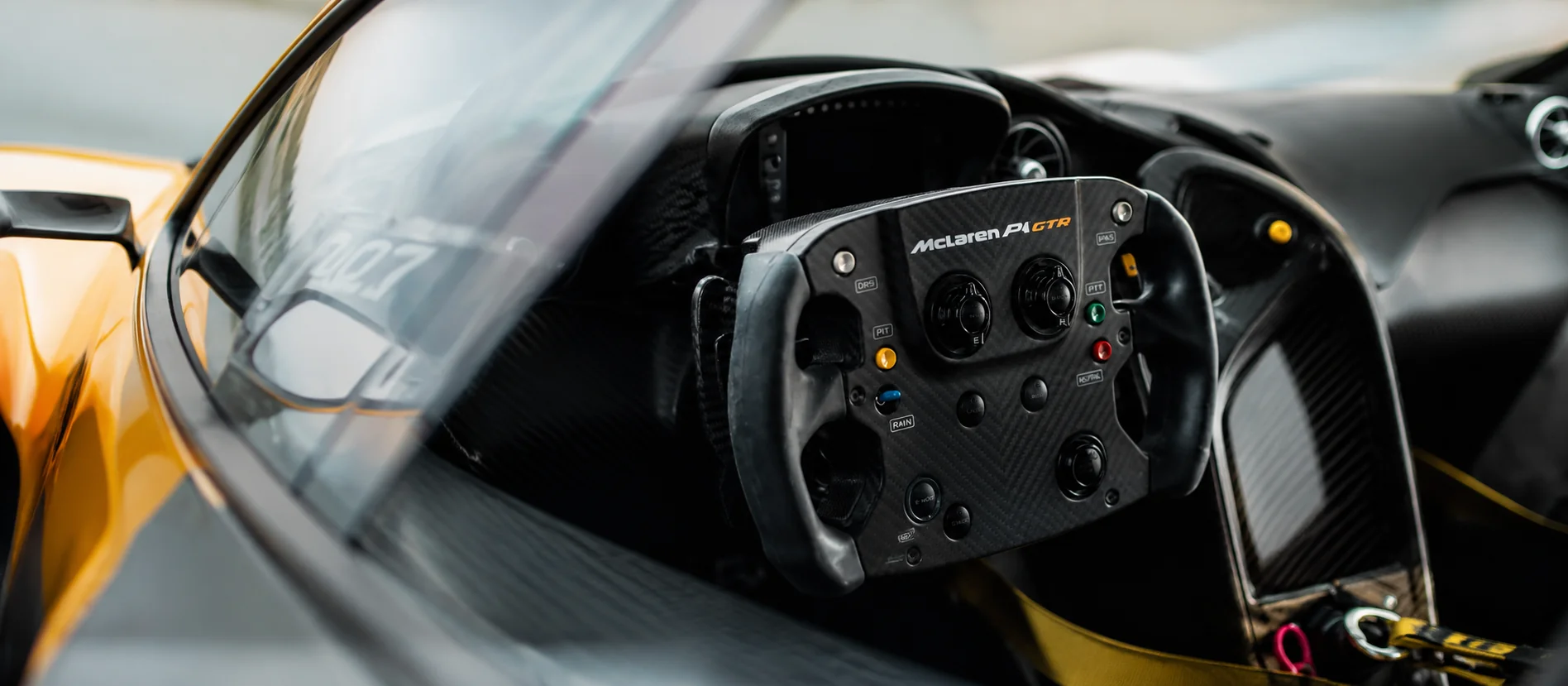
All of it arrives in the same place. A seat, a wheel, and someone who has to use both.
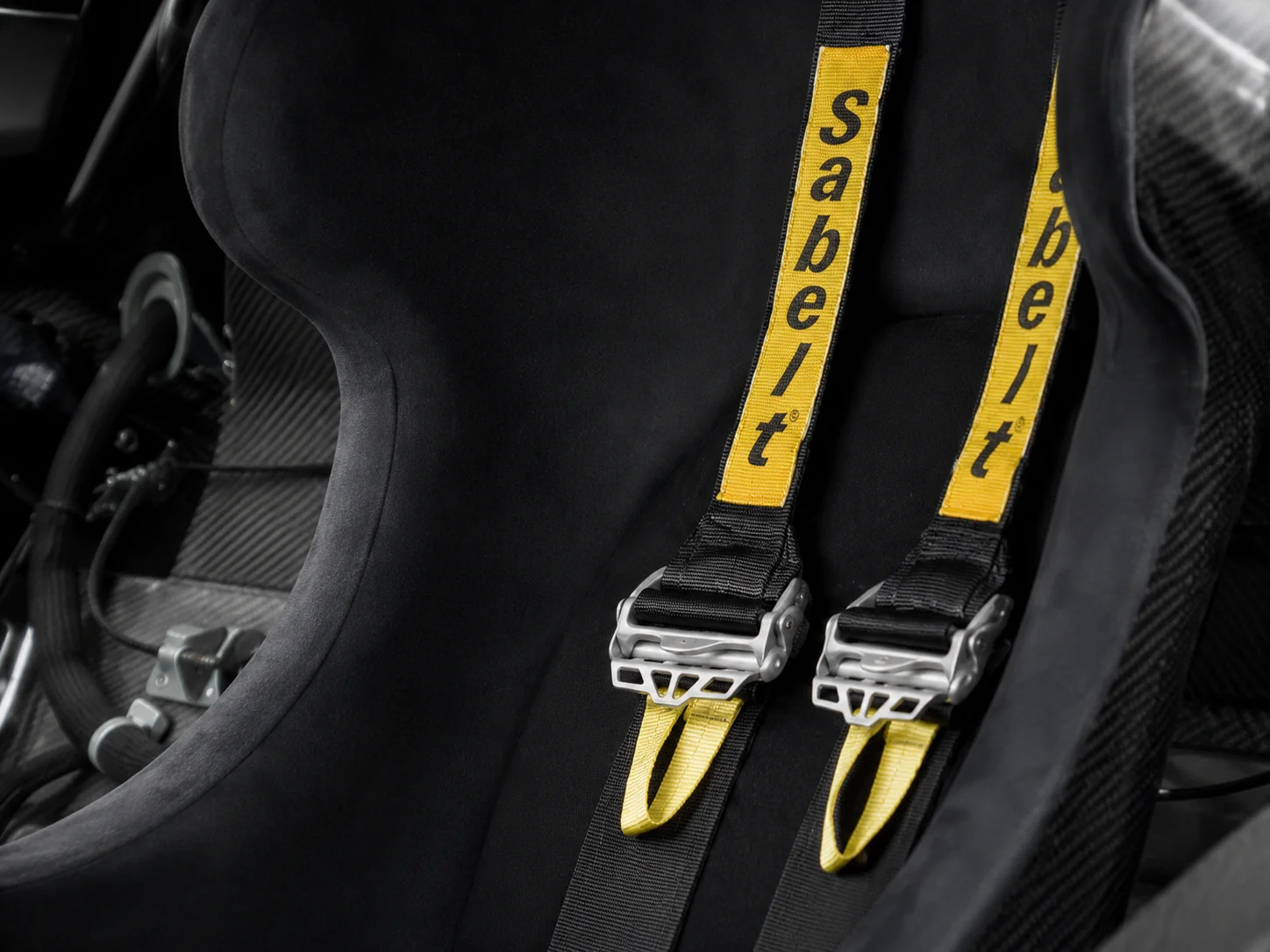
Two seats, two sets of six-point Sabelt harnesses, and only one of them is there to enjoy the car. The other is a working position, for an instructor or an engineer who needs to see what the driver is doing while he does it.
Everything around them was chosen by weight. Black Alcantara, bare carbon, aluminium buckles, yellow webbing, and no surface that exists to be looked at.
The switches that matter under pressure are red and sit together on the centre spine: door release, fire suppression. A hand finds them on the first attempt, which is the entire specification.
It is the least decorated part of the car and the clearest statement of what the car is.
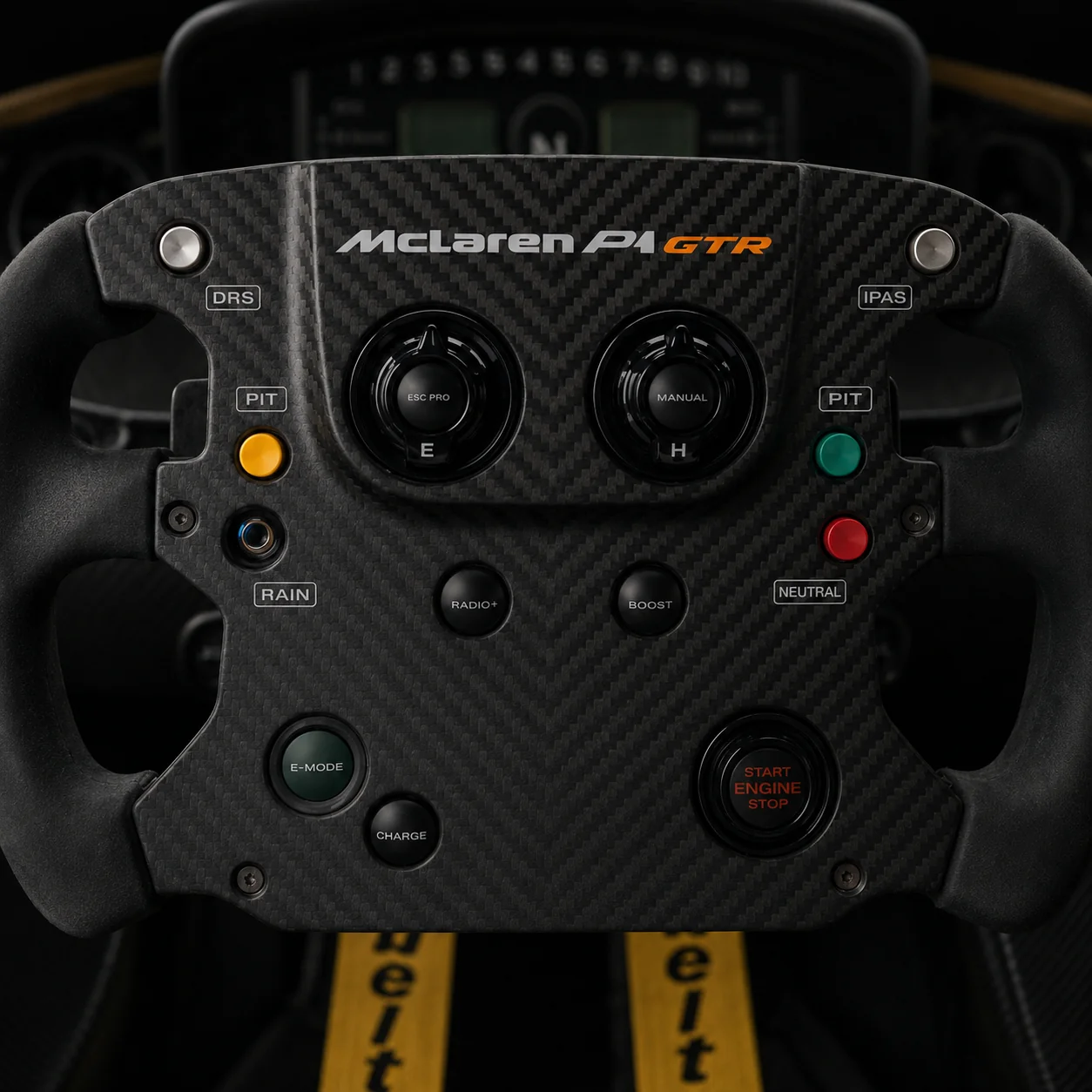
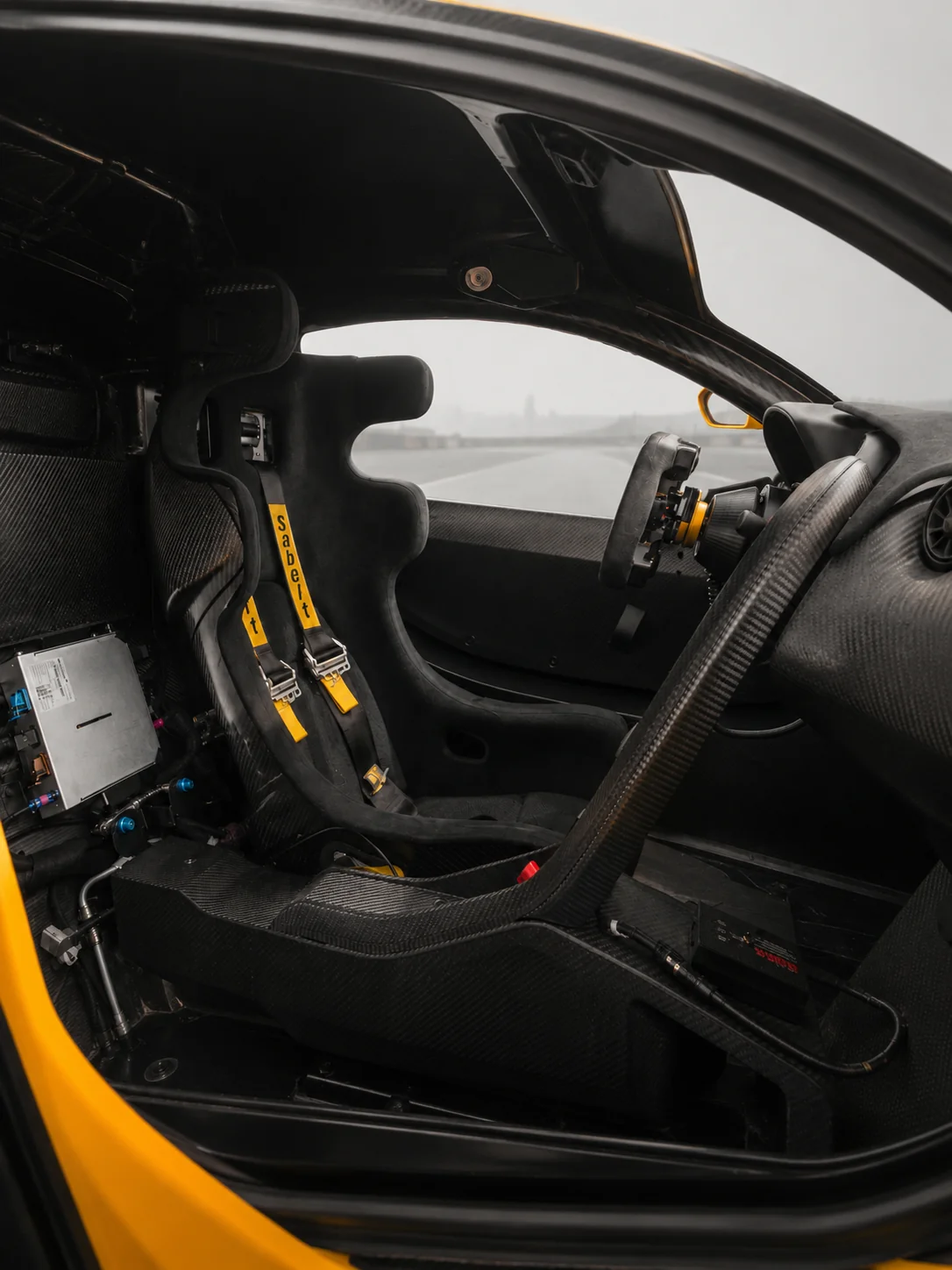
Chassis 007, filmed as it stands today.
Two hundred and thirty kilometres, spread across eleven years. Less than a single track day at most circuits, and less than many of these cars cover in an afternoon.
That figure is the whole record. There is no accident history to explain, no rebuild to document, no period of hard use to account for. The wear a GTR normally carries, in the tyres, the brakes, the underside and the leading edges, has not begun.
It stands in Volcano Yellow over exposed carbon, in the presentation McLaren chose when it launched the model, with 007 on the doors, roof and wing endplates.
Track specification throughout, as Special Operations released it. Nothing has been added, substituted or set back to standard.

Powertrain
Performance
Chassis
Dimensions
This car
All figures are stated in good faith and remain subject to buyer verification.
Exterior, cockpit, underbody and the surfaces that would show use if there were any.






The carbon MonoCage came straight from the road car, unaltered. That is the reason the GTR could exist at all: the hardest and most expensive part of the engineering had been signed off years earlier.
Four lifting points fed by a compressed air line. It is the clearest sign of what McLaren expected of these cars: they would be worked on at circuits, by people in radio contact, not parked in front of a house.

The road car runs a larger wheel at the rear than the front. This one runs nineteens all round, because a slick works its sidewall in a way a road tyre never has to.
Most of these cars never went home with their owners. McLaren stored them, prepared them, transported them and handed them over at the circuit gate, which is why so many have covered so little ground.

The fixed wing makes ten per cent more downforce than the P1's active one, for a simple reason. The road car's wing had to be able to disappear. This one never has to move.
Left as delivered, the car belongs to circuits: private track days, manufacturer programmes and the dynamic events that exist precisely for cars no rulebook will accept.
Converted to road registration, it becomes rarer still. A handful have taken that route, and what emerges is a car carrying race aerodynamics and a thousand metric horsepower down a public road.
The third door is the one most of these cars went through, which is to sit still. This one has done that for eleven years. Whoever takes it next decides whether it stays that way.

Enquiries are handled privately and answered personally. Full documentation, history and terms follow before any viewing is arranged.